Merken magazine

LMOSOWER
PERFORMANCES OF THE UNSEEN
Across concerts, streets, monuments, and fleeting moments of innocence, this series asks who is seen, who performs, and who remains unseen. LMOSOWER aka Khalil Ghlimi moves between public spaces and intimate moments, exposing what is often hidden beneath aestheticized narratives:
repression,
marginalization,
emotional fatigue,
and the human cost.
Makhzan Victime
Taken during the Gen Z protests in Casablanca, this shot reflects the power imbalance embedded in Moroccan reality. Bodies lie on the ground, beaten and humiliated, all the while authority rises above them, faceless and unnamed. The Makhzen is a generational concept that has been present without identity, omnipresent yet invisible, and constantly in the people's spirits. Beneath Morocco’s public image culture of color and craft lies a collective memory shaped by generational trauma, repression, and silence.
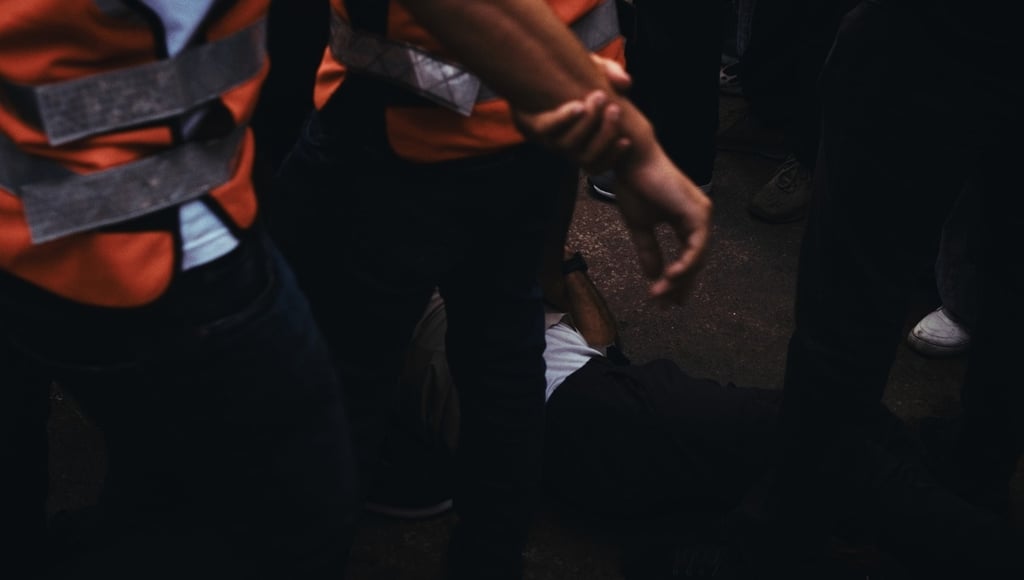
Casablanca – Gen Z Protests (27/10)
Hidden Memory
What defines us most remains submerged. Morocco is often reduced to what is visible and consumable, the colors, crafts, and rituals designed for the gaze. The photographer catches here what is beneath the visible lies, a submerged weight of history, pain, and unspoken oppression. Like an iceberg, the most significant part remains unseen, carrying stories that rarely make it to the surface.
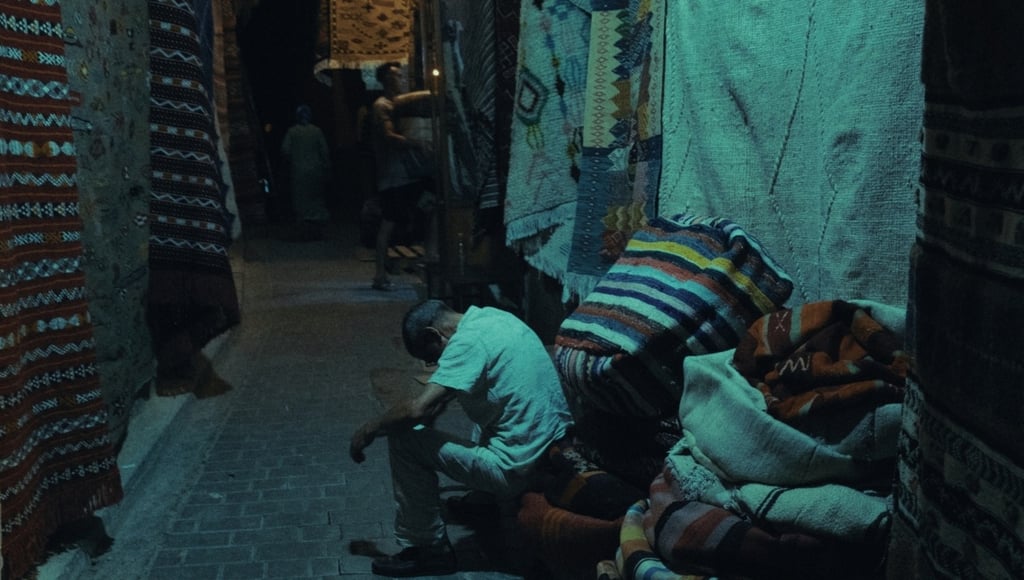
Fes– Old medina (2023)
Colorless Labour
Dar Dbagha, Fez, a site admired by the Western colonial eyes, yet labor unfolds in neglect. The leather crafted here travels the world, while the workers remain trapped in fumes, paint, and shadows, earning barely enough to survive. This photograph exposes the contradiction between global admiration and local erasure, where monuments are celebrated but lives are forgotten.
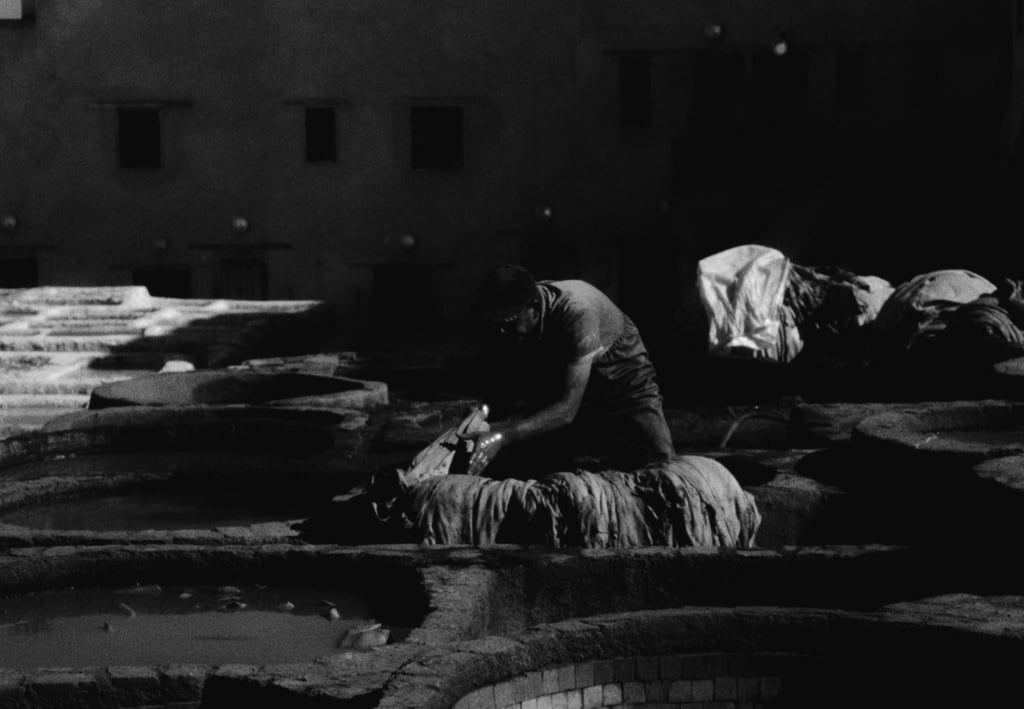
Dar Dbagha Workers, Fez (2023)
Where to Cathart
Metal music and mosh pits become a language of resistance in Morocco. In the chaos of sound and movement, dissatisfaction, rebellion, and passion find release. This space offers catharsis, an embodied refusal of silence and a momentary escape from suffocating realities. This is where they cathart.


Lboulevard Festival, Casablance (2025)
Under Observation
Sealed behind glass, the subject becomes an object—watched, consumed, and interpreted, a dance between performance and spectatorship. It reflects a condition of modern existence where life itself turns into spectacle, and intimacy dissolves into voyeurism.
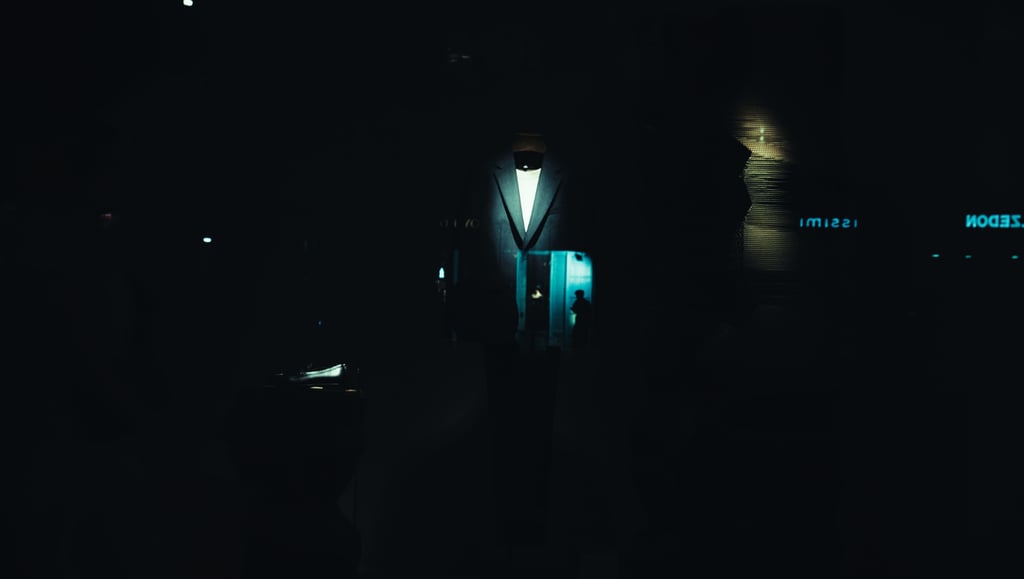
Casablanca (2025)
Behind Bars of Capitalism
This photograph critiques capitalism’s promise of an ideal humanity while quietly enclosing individuals within invisible bars, systems that demand ... something
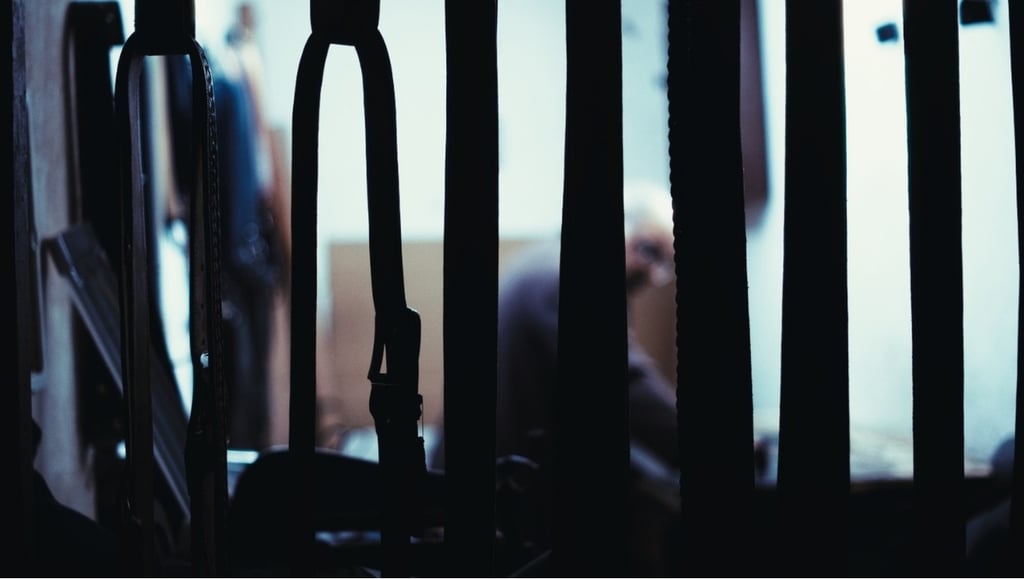
Casablanca (2025)
Humanity Seems Perfect
Perfection functions as a distraction. Smooth surfaces hide fractures, harmony masks control. And while humanity is curated to appear flawless, imperfection becomes a threat rather than a truth. Thus, vulnerability and insecurity are erased under the name of chaos.
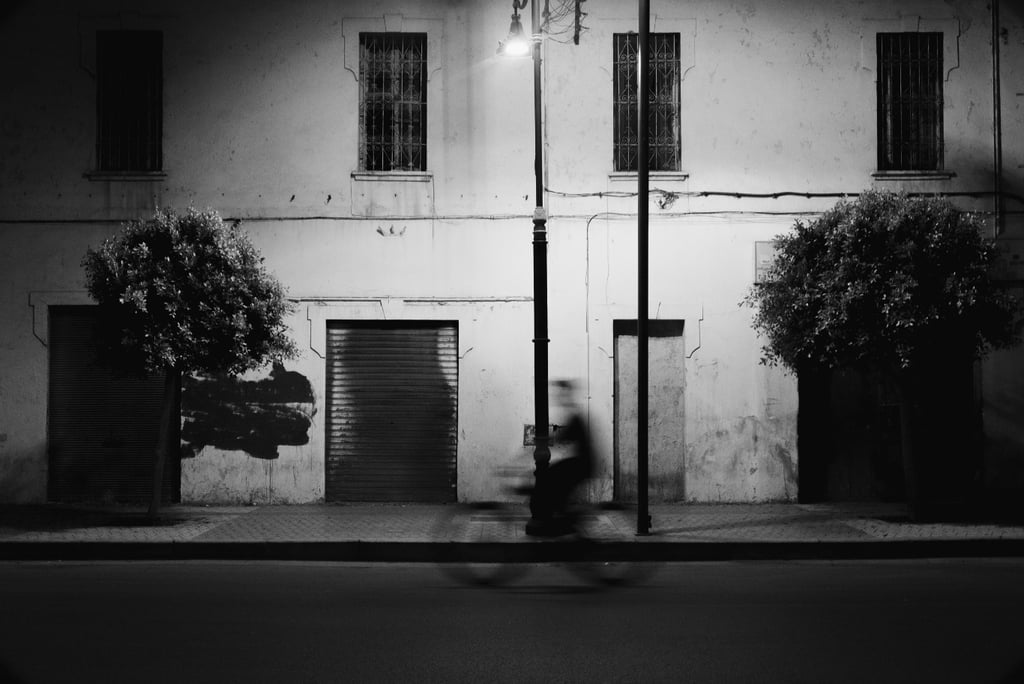
Casablanca (2025)
Except Ye Be as a Child
Small against a long flight of stairs, the child moves toward the light. The gesture is simple and unconscious, yet full of meaning. The photograph echoes Matthew 18:3, where faith is not found in certainty or knowledge, but in childlike belief. To trust, to believe, to move forward without fear—here, childish faith becomes spiritual greatness.
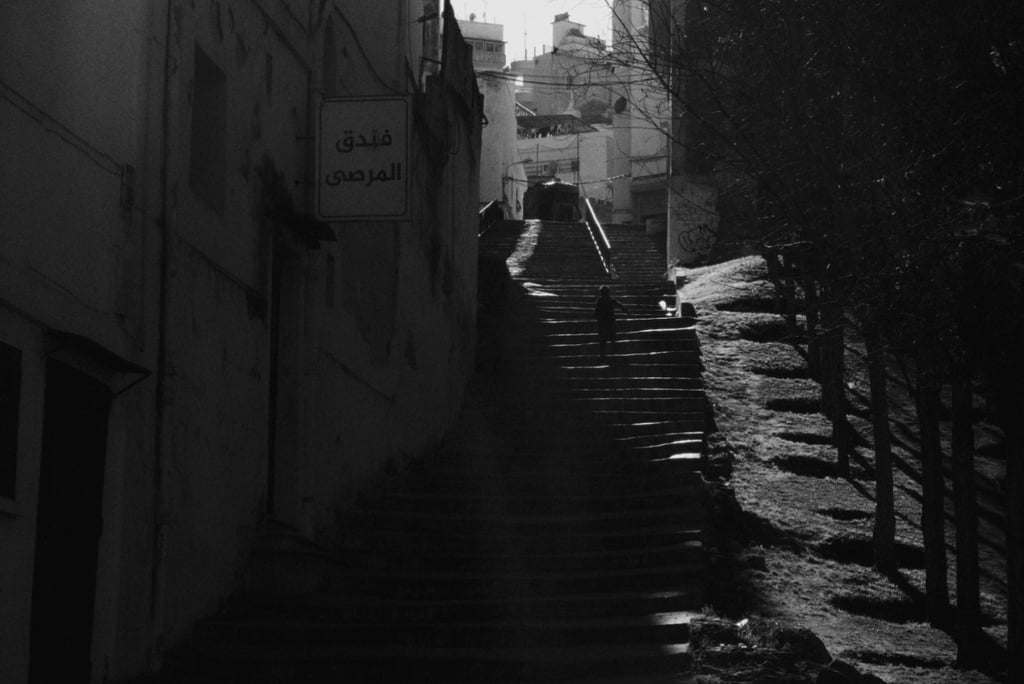
Tangier (2025)
Returning
Taken during a trip with friends, this moment holds a feeling rather than a narrative. There is lightness, presence, and an unguarded way of seeing. Happiness appears without effort, without reason. Momentarily, the self loosens, and the world is met with the same openness as childhood, returning to innocence as a lived state, in a world that forcefully takes it from you.


Tangier (2025)
Pause
The city continues, regulated and distant, while he remains suspended in place. Between motion and stillness, presence and exclusion, the photograph lingers on a moment of quiet separation, as the subject is near the flow of life, yet not fully inside it.
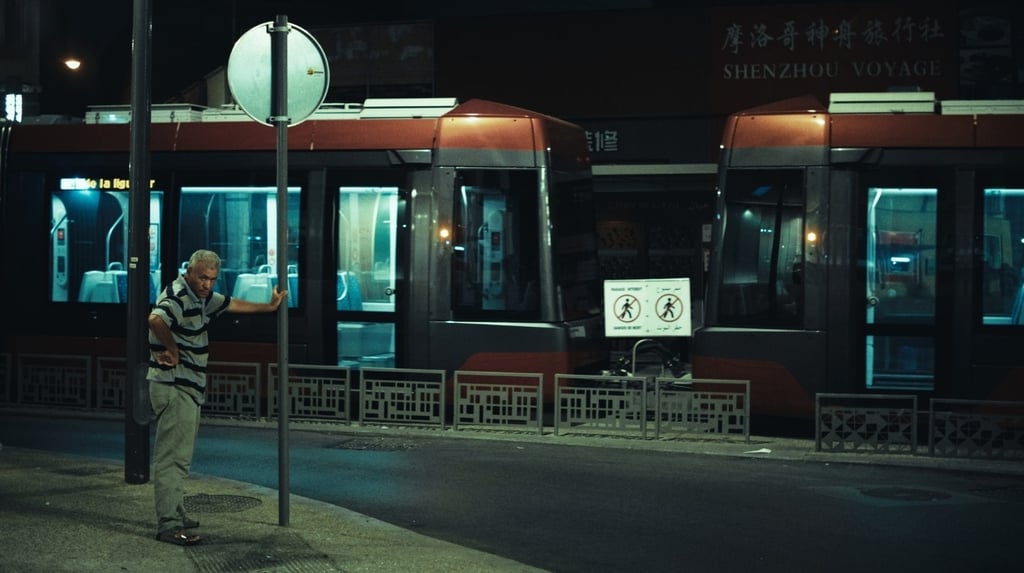

Casablanca (2025)
Liminality
Where modern and traditional meet without fully merging. The photograph captures a space of transition, neither fixed nor resolved. Here, identity is not inherited or defined, but negotiated. The photograph lingers in that in-between state, where meaning is still forming.

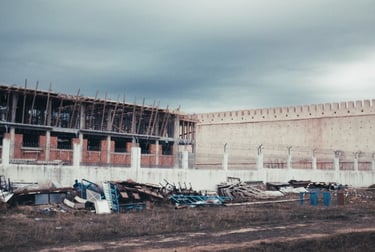
Meknes (2025)
Everyone is Performing
Taken at a concert, this shot brings the idea of performance one more time. Unrestricted for the artists on stage, but in how the roles are assumed, gestures repeated, and presence shaped for others. Over time, this constant acting creates distance between the self and the world, and between the self and itself. Even in a crowd, a quiet sense of solitude remains.
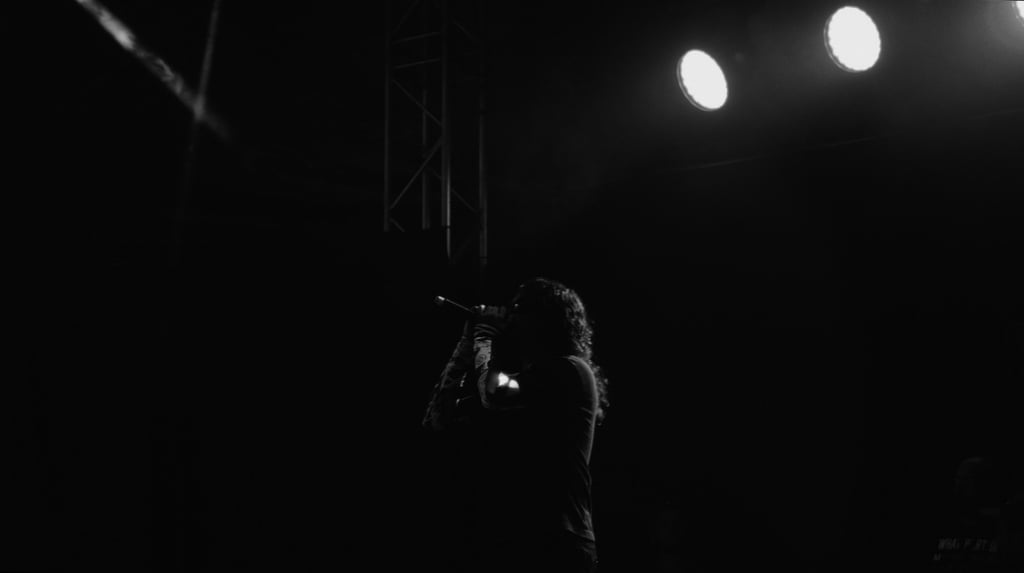
Meknes (2025)
About LMOSOWER
Known as LMOSOWER, Khalil Ghlimi moves fluidly between photography, videography, and film. His work varies across music videos and visual projects deeply rooted in Morocco’s cultural scene, shaped by a long-standing passion for image, rhythm, and alternative expression.
At the core of his practice lies street photography, where LMOSOWER returns again and again to the unscripted, the overlooked, and the unfiltered. His lens resists touristic voyeurism, polished ideals, and mediated fantasy, seeking instead to capture life as it unfolds beneath curated images and polished surfaces. Everyday gestures, moments of pause, and quiet tensions.
As part of a wider artistic movement in Morocco, LMOSOWER is among those opening difficult conversations about power, labor, faith, youth, and visibility. His images do not explain or soften these realities; they remain present, allowing meaning to emerge through observation rather than instruction, inviting reflection, and offering space for what is often pushed to the margins to finally be seen.
LMOSOWER
LMOSOWER
LMOSOWER
LMOSOWER